

January 16, 2026: By Peter McAliney. In today’s rapidly evolving work environments, the boundaries between professional and personal life have never been more fluid. Hybrid and flexible work models, once considered progressive, are now standard operating conditions. This evolution has created new opportunities for autonomy, but it has also introduced challenges in maintaining emotional health, productivity, and sustained performance. Work–life balance by design requires intentional strategies that integrate both logic and emotion, what the Rutgers Professional and Executive Education team refers to as the head and heart framework.
The Head and Heart Framework
At its core, work–life balance is no longer a simple matter of separating “work time” from “personal time.” Instead, it is a dynamic and ongoing process of integration. Modern balance involves aligning your schedule with your values, your commitments with your capabilities, and your communication with your emotional well‑being. The head and heart framework helps guide this integration, serving as a reminder that effective decision‑making requires more than rational analysis—it also requires intuitive awareness.
Historically, human societies began with a strong “heart” orientation, relying heavily on instinct, imagination, and emotion for survival. Over time, rationality and logical thinking—the “head”—became dominant, especially in modern organizations where productivity measures and efficiency reign supreme. This “rationalist bias” has led many professionals to undervalue emotional intelligence, even though emotion heavily influences perception, motivation, and decision‑making.
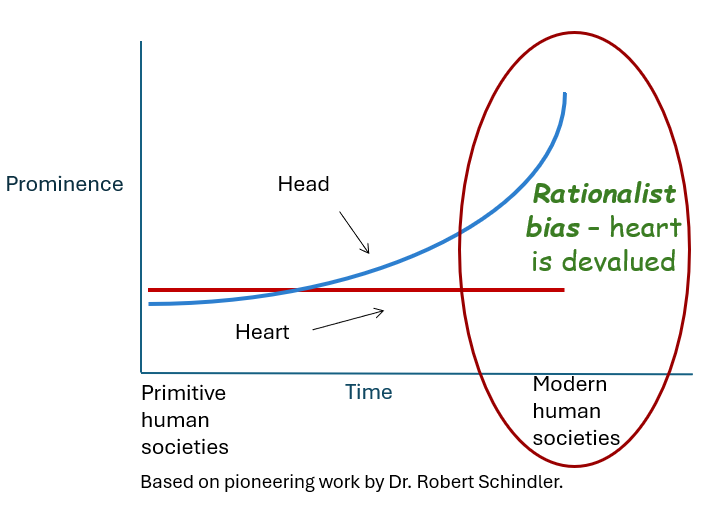
Achieving work–life balance means intentionally harmonizing both domains. When the logical and emotional aspects of our work lives are aligned, authenticity emerges. Authenticity builds trust within teams, with clients, and within ourselves. Trust, in turn, supports psychological safety and reduces burnout, allowing individuals and organizations to thrive.
One practical arena where this balance is essential is in communication and time management. These two areas are deeply interconnected: communication sets priorities and shapes collaboration, while time management defines when and how communication occurs. The head–heart approach reminds us that clarity and structure are important (the head), but so are tone, empathy, and emotional resonance (the heart).
Putting the Head and Heart to Work for You
Professionals often undermine their productivity through common time drains: multitasking, unproductive meetings, email overload, excessive perfectionism, procrastination, and poor prioritization. Many of these behaviors stem from emotional triggers such as fear of failure, fear of disappointing others, or the bias that tasks appearing urgent must also be important. By reflecting on these patterns, individuals can identify the habits that drain their cognitive and emotional energy.
Tools such as the Pomodoro method reinforce this balance. The Pomodoro technique structures work into focused intervals, promoting cognitive discipline (head), while built‑in breaks support emotional and mental recovery (heart). Similarly, adapting communication styles to diverse audiences relies on combining logical clarity with empathy, storytelling, and the ability to read emotional cues.
Meetings are one of the biggest contributors to overload. Disciplined meeting management practices can benefit significantly from this approach. Purposeful meetings start with clearly defined objectives and decisions about whether meeting is truly necessary. Inclusive agendas acknowledge emotional tone, encourage participation, and foster psychological safety. When designed well, meetings reduce, rather than increase, cognitive load and emotional strain.
In addition, today’s professionals must navigate digital and AI‑driven environments that often amplify overload. While AI tools can streamline tasks such as scheduling, drafting communications, or filtering information, the constant influx of digital stimuli can also increase emotional fatigue. Creating intentional boundaries—turning off notifications, scheduling tech‑free blocks, and using AI as a support rather than a crutch—helps maintain a healthy digital ecosystem.
Take Action Now!
Ultimately, achieving work–life balance requires regular reflection. Time audits help reveal misalignments between values and commitments. Setting empathetic boundaries protects focus time while maintaining strong relationships. And adopting even a single new habit that integrates the head and heart can set the foundation for long‑term sustainability.
The journey toward work–life balance is deeply personal, but it does not need to be undertaken alone. By using a structured, emotionally aware approach, professionals can reduce internal tension between the “work self” and the “life self,” creating space for authenticity, connection, and well‑being.
If you’d like to learn more about how PEER can support your career success or skill up your organization with the 21st century tools needed to thrive in an ever-changing industry environment, please use the link below to schedule an appointment with our Senior Program Coordinator Cindy Phillips.