
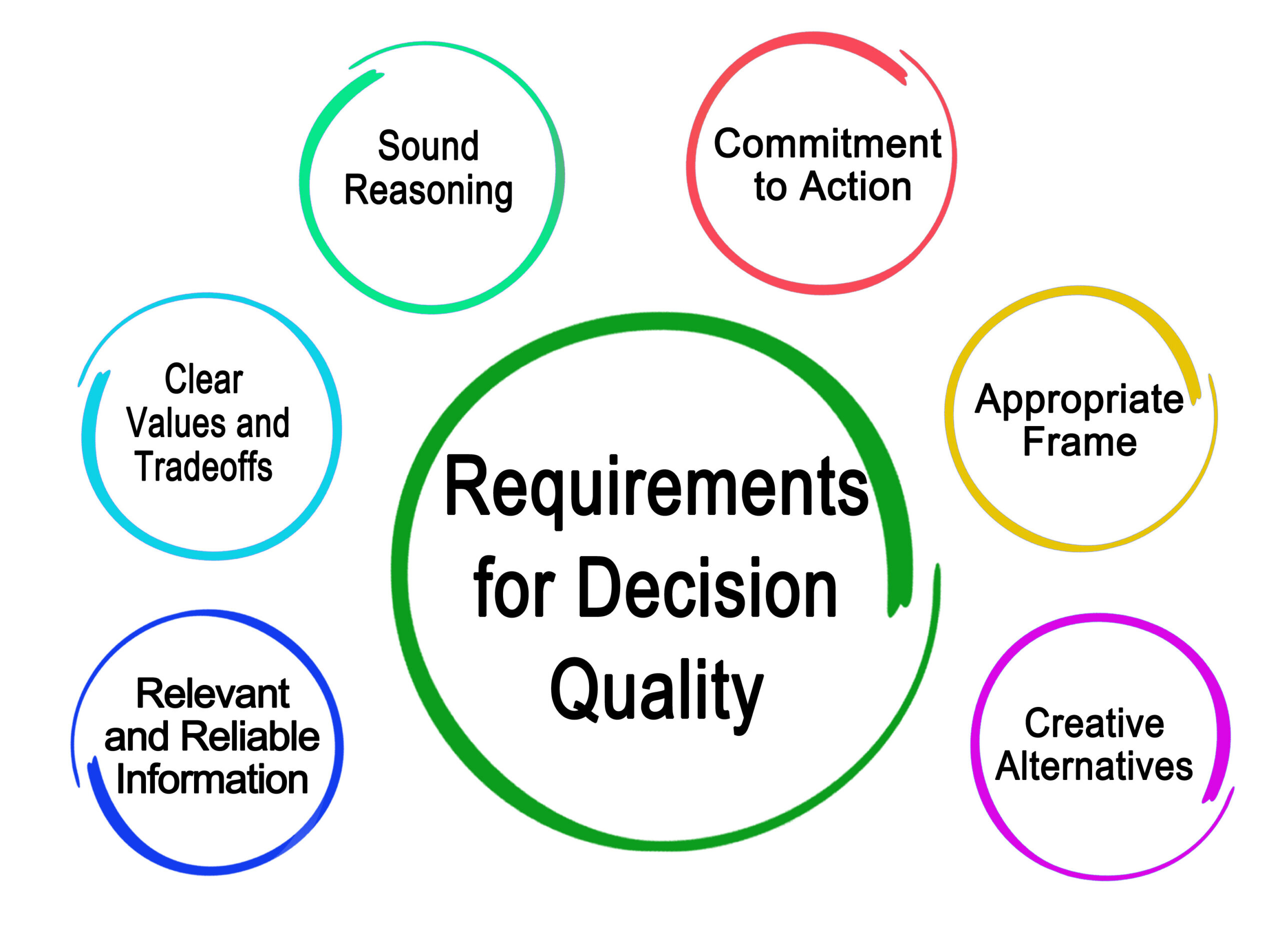
February 18, 2026: By Peter McAliney. The ability to make clear, thoughtful, and timely decisions is one of the most important competencies an organization looks for in rising professionals. Yet many teams still rely on intuition, habit, or informal processes that leave quality of products, services, and outcomes to chance. Quality decision making is not simply about choosing among options; it is about how leaders think, gather information, weigh tradeoffs, and commit to action. It requires a structured, repeatable approach that helps individuals and teams navigate complexity with confidence.
The Six‑Step Quality Decision Making Framework provides such a roadmap. Drawn from best practices in operations, change management, and organizational behavior, the framework helps leaders slow down where it matters and speed up where they can, which minimizes risk while maximizing clarity and alignment. This article explores each of the six steps and how they equip a professional with the discipline to make smarter, more effective decisions.
1. Start with the Right Frame: Solve the Real Problem
The first step is getting the right frame; this is the foundation of every quality decision. Individuals must begin by clarifying what decision is actually being made and why it matters. This includes identifying who the decision maker is (n.b., it may not be you!), whether there is a shared need for change, and how the issue impacts stakeholders across the organization.
Without the right frame, teams can invest significant time solving the wrong problem. By establishing the scope, legitimacy, and shared understanding of the decision, organizations prevent wasted effort and confusion. A well‑framed decision ensures that everyone begins the process aligned and engaged.
2. Use the Right Data: Build Intelligence, Not Assumptions
Once the problem is defined, teams must gather the right data—information that is credible, relevant, and comprehensive. Decision makers must ask: Do we have enough information to make an intelligent choice? Do we understand the internal, external, regulatory, or industry implications of what we are deciding?
Quality data collection can come from multiple channels:
- Active methods such as interviews, surveys, site visits, and focus groups
- Receptive methods such as customer complaints, credits, or written feedback
- Indirect methods such as repeat business or market behavior
The goal is not to collect data for its own sake, but to ensure decisions are informed rather than reactive. Great decision makers continuously monitor what matters—quality, cost, time, risk—and adjust accordingly.
3. Identify the Right Alternatives: Generate Good Choices
A decision is only as strong as the alternatives considered. High‑quality decision makers avoid the trap of focusing too early on a single solution. Instead, they cultivate a broad set of alternatives from across functions, levels, and perspectives.
Teams should look broadly at best practices and lessons learned and build structured, organized options that align with the decision context. The objective is not to create endless ideas but to develop viable, well‑vetted paths that offer real choices for shaping the future.
Strong leaders know that creativity is not optional; it is essential to effective problem solving. By opening the door to collective intelligence, organizations avoid blind spots and promote higher‑quality outcomes.
4. Clarify Values & Tradeoffs: Understand Cost, Culture, Time, and Impact
Every decision has consequences, and great leaders make choices with a clear understanding of values and tradeoffs. This step helps teams analyze decisions across the multiple dimensions of cost, time, culture, risk, and impact so they can prioritize what truly matters.
Tools like the PICK Chart (Possible, Implement, Challenge, Kill) help categorize options by ease and payoff. Leaders must evaluate how cultural norms, budget constraints, external pressures, and long‑term implications influence each alternative.
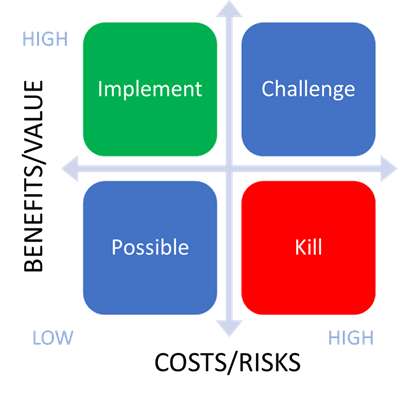
Understanding tradeoffs is not about eliminating difficult choices—it is about surfacing them openly so decision makers can proceed with clarity and intention.
5. Apply the Right Logic and Reasoning: Connect What You Know, Want, and Can Do
Good decisions require sound logical reasoning, which includes a systematic assessment of quality, cost, speed, service, and safety. Leaders must weigh a wide range of operational considerations, including:
- Product or service features
- Reliability, availability, and performance
- Process costs, pricing, depreciation, and lifecycle value
- Turnaround times, delays, and efficiencies
- Service requirements, warranties, and maintainability
- Risk management, environmental impact, and compliance
This stage synthesizes what teams know, what they want, and what they can realistically do. It is where data, judgment, and strategic insight intersect. Without disciplined reasoning, even the best information can lead to poor outcomes.
6. Ensure the Right Commitment & Follow‑Through: Make it Real
A high‑quality decision means nothing without action. The final step is commitment and follow‑through, which focuses on execution. Using principles from change management, leaders need to:
- Identify champions and sponsors
- Create a shared need that outweighs resistance
- Shape a clear, legitimate vision
- Mobilize additional commitment across stakeholders
- Align policies, practices, and resources
- Monitor progress with meaningful metrics
- Sustain performance over time
Decisions fail not because they were poorly made, but because they were poorly implemented. Strong follow‑through transforms decisions into results, builds trust, and strengthens organizational capability.
The Power of a Repeatable Framework
The Six‑Step Quality Decision Making Framework provides professionals with a consistent approach for navigating complexity. Whether deciding on staffing, investment, process improvement, customer strategy, or technology upgrades, the framework helps teams move from intuition to intention—from quick reactions to quality outcomes.
By embedding this process into everyday practice, organizations foster thoughtful problem solving, cross‑functional collaboration, and a culture of discipline and accountability. Ultimately, quality decision making becomes a competitive advantage.
__________________________________________
If you’d like to learn more about how PEER can support your career success or skill up your organization with the 21st century tools needed to thrive in an ever-changing industry environment, please use the link below to schedule an appointment with our Senior Program Coordinator Cindy Phillips.